Make the list before you decide it is short
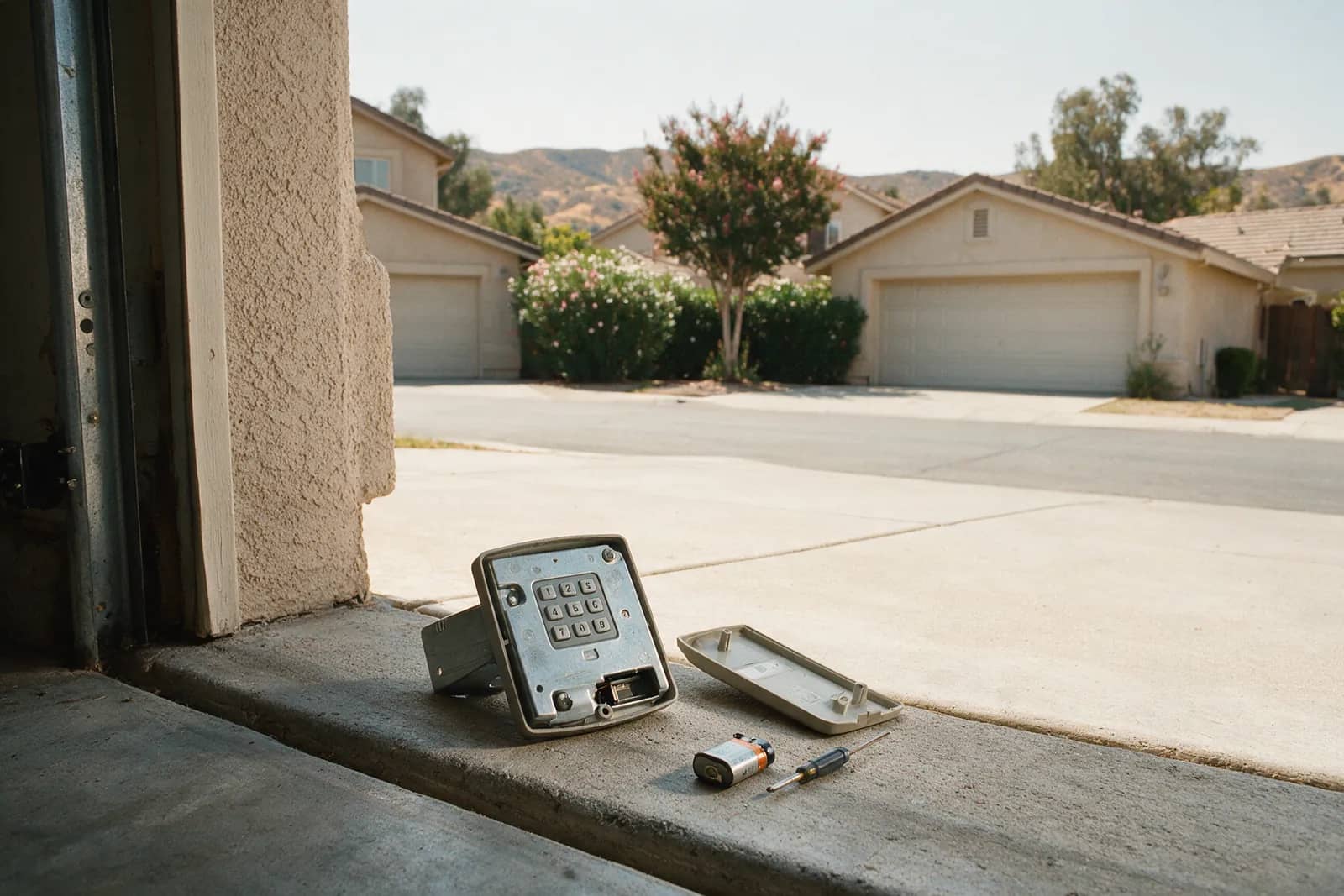
Sit down for five minutes and write out everyone who has ever been given the number on your garage keypad. Not who you think still uses it. Everyone who has ever had it.
The list runs longer than people expect. The previous owner and their adult children. The realtor, and the period when a lockbox hung on the front door. The painter, the roofer, the flooring crew and whoever they subcontracted. The dog walker, the house sitter, the cleaner who comes every other Thursday. A neighbor who watered the plants one August. Your teenager, and by extension two of their friends. And on the newer tracts, the builder, because the installer set that code and moved to the next house on the street with the same one in his head.
None of this is a story about anyone doing anything. It is a list of people, most of whom are perfectly decent and none of whom you keep track of. The number is the point, not the names.
Why that code matters more than the front door key
In most Livermore houses the garage code is the master key, whatever the front door has on it. Type four digits, the overhead door rolls up, and you are standing in the garage. From the garage, the door into the kitchen is usually a hollow-core slab with a builder knob and no deadbolt, and in a large share of houses it is not locked at all, because it feels like an interior door.
So the code does not open the garage. It opens the house. That is worth understanding once, without drama, and then acting on.
It also opens the room where the spare car key hangs on a nail, where the tool that would open anything else is sitting on a bench, and where the second garage remote is clipped to a visor in a car parked inside.
The twenty-minute audit
Write down every way into your house that does not need a key you personally carry. The keypad code by the overhead door. Every remote: how many were issued, where each one is now, whether one left with a car you sold. The button built into the mirror of any car, which stays paired to the opener after the car changes hands. Every user code stored in a keypad deadbolt, which you can read off the lock menu or the app. Any lockbox still hanging on a gate or a downspout from the sale. The spare key with a neighbor. The spare key under a pot.
Then mark each line with a name. If a line has no name against it, that is the one to deal with first. A remote you cannot account for is worse than a code five people know, because a code can be changed in two minutes and a remote you cannot find cannot be handed back.
Do the same for the shed and the side gate while you are out there. A padlock whose key has been passed around a couple of contractors is not doing much, and it is the cheapest thing on the list to put right.
What you can clear yourself, tonight, for nothing
The keypad code by the overhead door is yours to change and the manual walks you through it in about three minutes. Most openers also have a learn button that clears the entire remote memory when it is held down, which wipes every remote and every mirror button ever paired to that opener, including any you cannot account for. You then re-pair the two remotes you actually hold. That is a button on the opener, not a lock, so nobody needs to come out for it.
User codes on a keypad deadbolt are the same story. Delete the lot, add one code per person who lives there, and stop giving the same number to everyone who visits. Many of these locks hold a separate temporary code, which is what a dog walker should have.
None of this costs anything, and doing it once a year takes less time than finding the manual will.
What you cannot clear yourself
Physical keys. A key that was copied at a hardware store four years ago cannot be recalled, deactivated or counted, and no amount of changing codes touches it. The only way to make an old key stop working is to change what the lock accepts.
That is rekeying, at $25 to $42 per cylinder, with cylinders after the first coming in at the low end of the band because the combination is already set. Front door, garage service door, back slider, gate padlock: count them on the call and one figure comes back for the property with the $89 visit inside it, not added afterwards.
The hardware stays on the doors. Only the key changes. On an older Livermore house with original knobs, that means the doors look exactly as they did and the keys in circulation stop working, which is the entire result you were after.
When to run the audit
There are five moments that deserve it, and none of them is a surprise. The week you take possession of a house. The week a tenant leaves. When a job with a contractor ends and the code you gave them is still live. When you sell a car that had a paired mirror button in it. And when a house sitter or a walker stops working for you.
Between those, once a year is enough. Put it near something you already do annually, like checking the smoke alarms, and it will actually happen.
If you would rather have it done in one visit, the codes and the keys can be dealt with in the same trip, and you leave holding a key that works and a code you picked yourself. Calls are answered 24/7 and the figure is settled on the call, with the evening $45 or overnight $80 counted inside it rather than appearing at the door.
Quick answers
How do I clear a garage remote I cannot find?+
Hold the learn button on the opener until the memory wipes, which clears every remote and every paired car mirror button, then re-pair only the remotes you hold. It is in the opener manual, it takes a few minutes, and it is not a locksmith job.
I changed the code. Do I still need to rekey?+
If keys were handed out, yes. A code change does nothing to a key that was cut four years ago. Rekeying is $25 to $42 per cylinder, the hardware stays on the doors, and only what the lock accepts changes.
The previous owner says they gave us every key. Is that enough?+
They are probably telling the truth about the keys they know about. Nobody can account for copies made over ten or twenty years by gardeners, relatives and contractors. It is not about trust, it is that the count cannot be verified.
Need it handled rather than read about?
(925) 493-8551