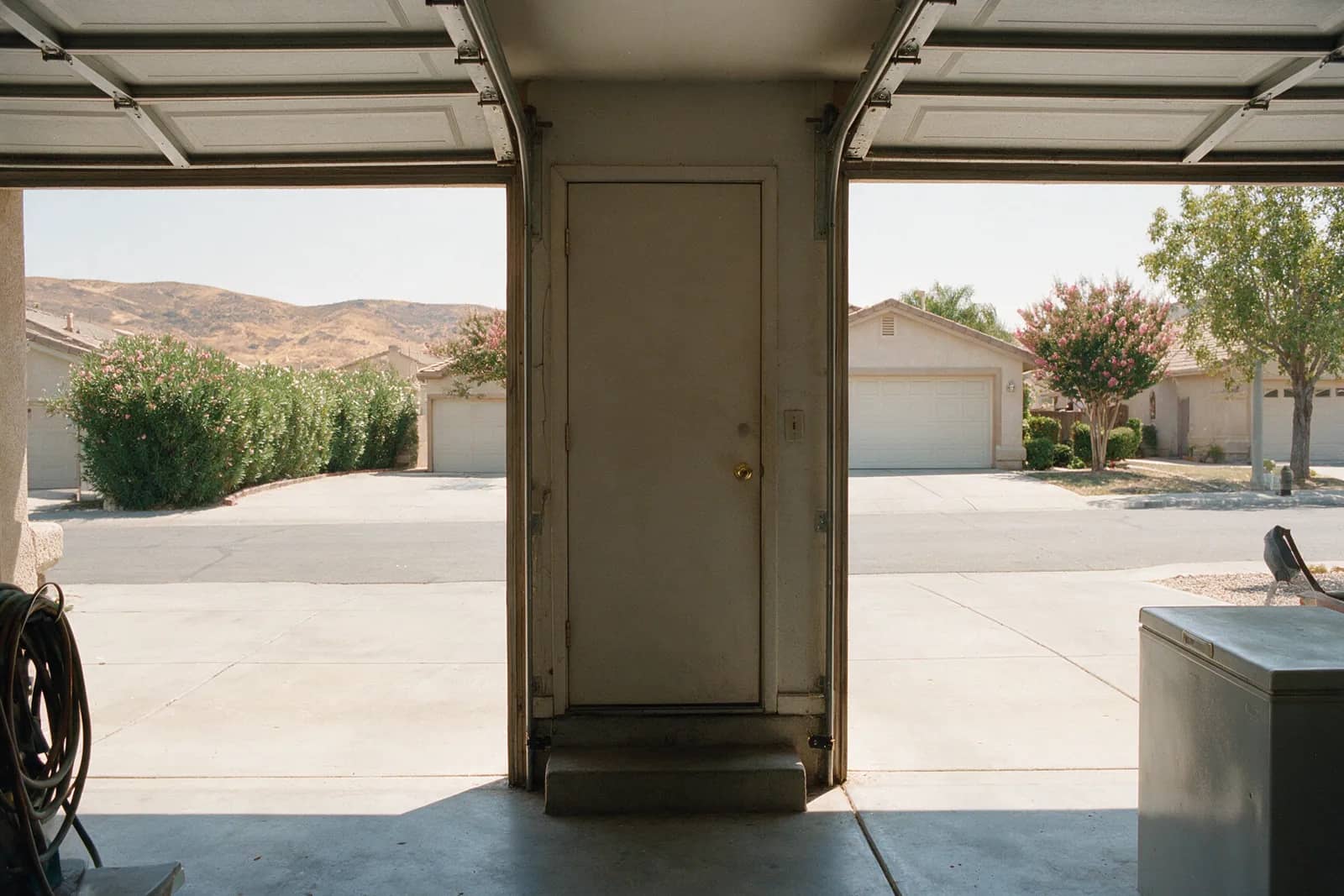
Which door this is
Stand in your garage and look at the door into the house. On most Livermore houses, from the sixties ranches through to the subdivisions south of Concannon, that door is a hollow-core slab with a plain builder knob in it and nothing above the knob. No deadbolt. The knob may not even be keyed.
It is also the door your household uses ten times a day and the one that gets left unlocked, because it feels like an interior door. Everyone treats the front door as the security of the house. The front door is the one that gets a deadbolt, a strike plate, sometimes a camera, and it is the door nobody comes through.
This is not an argument for worrying. It is an argument for spending forty minutes and a couple of hundred dollars on the correct door instead of the ceremonial one.
A two-minute check on your own door
Knock on the middle of the slab with a knuckle. A hollow-core door sounds like a drum and a solid one sounds like a fence post. Then knock near the edge, where there is a solid rail either way, so you can hear the difference between the two spots on the same door.
Look above the knob. If there is a deadbolt, turn the thumbturn and watch the bolt come out into the frame. If it stops short, wobbles, or has to be helped by lifting the door, the bolt is not seated in the strike and it is doing less than you think. Then open the door and look at the strike plate screws in the frame. Short screws that only bite the door casing are the common builder finish; long ones reaching the stud behind it are what you want.
Last, try the knob key if there is one. On a lot of these doors the knob is a passage set with no keyway at all, which means the only thing between the garage and your kitchen is a spring latch you can push back with a bit of plastic.
What a deadbolt on that door costs
Fitting a deadbolt on the garage-to-house door is lock replacement and installation, $118 to $299 for that door, with the $89 service call counted inside the figure rather than added on top. Where the door already has a bore for one, the work is at the low end. Where the slab has to be bored and a new strike mortised into the frame, it sits higher.
Two details are worth asking for by name. A bolt that throws a full inch, not the short auxiliary bolt that lives inside some knob housings. And three-inch screws through the strike into the stud behind the frame, which cost nothing and do more than the lock does.
Choose a thumbturn on the house side, not a key cylinder. That door is on your fire route out of the house. Nobody should be hunting for a key on the inside of a door they are trying to leave through.
The honest limit of a hollow-core slab
A hollow-core door will take a deadbolt and it will be better with one than without. It will not become a strong door. There is cardboard honeycomb between two thin skins in the middle of that slab, and the lock is only ever as good as what it is mounted in.
There is a second reason to look at the slab itself. The door between an attached garage and the living space is meant to be a fire separation, which a hollow-core interior door is not. If yours drums when you knock on it, replacing the slab with a solid-core or rated door is worth asking a contractor about. That part is carpentry and we do not pretend otherwise. We fit the lock into whatever door is hanging there, and we will say plainly when the door is the weaker half of the job.
If there is a door closer on it, leave it alone and do not prop the door open with a paint can. It is on that door for the same reason.
Key it to match while you are there
A new deadbolt on that door comes with its own key, which means you now carry two. That is how spare keys end up in drawers and how households quietly stop locking the door at all.
Rekeying it to match the front door is $25 to $42 per cylinder, and the second and third cylinders in the same visit run at the low end of that because the setup work is already done. One key for the front door, the garage service door and the door into the house is the version people actually use.
Ask for it on the call so the doors get counted then and one figure comes back for the whole job, deadbolt and rekey together, with the visit inside it.
What this does not fix
It does nothing about the overhead door. If the roll-up is old, or the opener quits, or a spring lets go, those are not lock problems and we do not work on them. That is the honest boundary of a locksmith, and we would rather draw it on a Tuesday afternoon than in your driveway.
What a deadbolt on the interior door does is simpler than that. It means the least secure part of the property, the garage, stops being the same room as your kitchen. The garage is where the side service door lives, where the code is shared, where the overhead panel can be lifted when the trolley is disconnected. One good lock between it and the house is the difference.
It is also the single change on a Livermore house that costs the least and moves the most, which is why it is worth a paragraph and not a scare.
Quick answers
My garage-to-house door has a keyed knob. Is that enough?+
A keyed knob is better than a passage knob, but the bolt is a spring latch with a short angled face and it is the easiest thing on the house to defeat. A deadbolt with a one-inch throw above it is $118 to $299 fitted, with the service call inside the figure.
Can you put a deadbolt in a hollow-core door?+
Yes, and it will hold better than nothing. It will not turn a hollow slab into a strong door, and we say so. If the drumming sound tells you it is hollow, a solid-core replacement slab is a carpentry job worth asking a contractor about; we fit the hardware into the door that is already hung.
Should the new deadbolt take the same key as my front door?+
Almost always yes. It is $25 to $42 per cylinder to key them alike, the later cylinders in the same visit come in at the low end, and one key for all three doors is the only version people keep using a year later.
Do you also work on the big garage door?+
No. Springs, panels and opener motors are a garage door company. We work on locks, cylinders, deadbolts, keypads, keys and the doors they sit in, including the service door and the door into the house.
Need it handled rather than read about?
(925) 493-8551